All Yale Fault Codes Explained: Forklift, Lift Trucks, and More
Modern warehouses rely heavily on industrial lifting equipment to keep operations moving efficiently. Yale is a trusted, leading provider of high-quality life equipment across North America, many material handling companies depend on their MHE equipment for day-to-day operations.
When something goes wrong with a Yale forklift or lift truck, the machine’s onboard computer generates a fault code to identify the issue. This fault code specifies exactly where the fault is coming from and what may be causing it.
These Yale fault codes help technicians quickly diagnose problems involving the engine, transmission, sensors, hydraulics, and electrical systems. Understanding what these codes mean can help you fix problems faster and prevent costly downtime.
In this Yale fault code and troubleshooting guide, we explain:
What Yale fault codes mean
How to read Yale error codes
A sample Yale forklift fault code list with explanations
How to clear fault codes properly
The best diagnostic tools for troubleshooting Yale forklifts
Table of Contents
What Are Yale Fault Codes and Why Do They Matter?
How to Read Yale Fault Codes
Types of Yale Fault Codes: Pending vs. Permanent
How to Locate Yale Fault Codes
Common Yale Fault Codes Explained
The Best Way to Diagnose Yale Forklift Fault Codes
How to Clear Yale Forklift Fault Codes
Understanding Common Yale Faults by System
FAQ
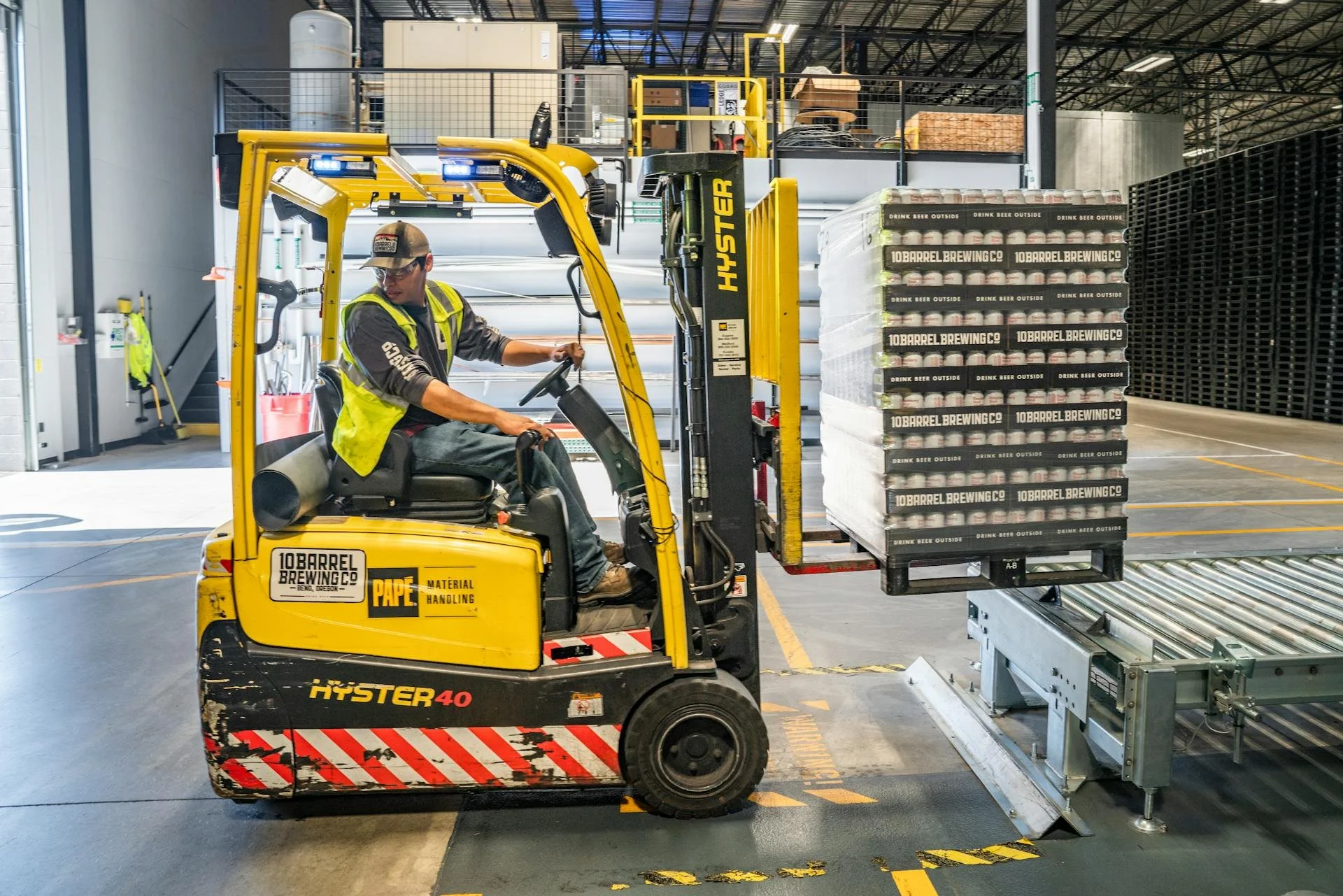
What Are Yale Fault Codes and Why Do They Matter?
Yale material handling equipment uses onboard electronic control modules to monitor performance. When a system detects a problem, the controller records a Diagnostic Trouble Code (DTC), otherwise known as a fault code.
How to Read Yale Fault Codes
Fault codes can look different depending on the manufacturer. For Yale, the fault code typically appears as a series of numbers and a hyphen symbol followed by one number at the end. Below is an example:
Let’s say your Yale forklift throws this fault code: 524223-0
The first set of numbers (524223) is the main fault identifier.
-0 is the failure mode indicator.
TLDR: Yale fault codes are diagnostic trouble codes (DTCs) generated by the forklift’s control modules when a system detects a problem. These codes typically appear as a number followed by a hyphen and a failure indicator (e.g., 524223-0) that helps identify the issue and its type.
Types of Yale Error Codes: Pending vs. Permanent
A pending Yale error code means the system detected an abnormal condition once but has not confirmed it as a permanent fault. Typically, pending codes will not trigger the check engine light. We recommend monitoring these codes closely to ensure they aren’t permanent.
A permanent Yale error code indicates the issue has been detected repeatedly and requires repair. These codes remain stored in the control module until the problem is fixed and the code is cleared. These codes should never be ignored.
How to Locate Yale Fault Codes
There are two main ways you can locate fault codes on Yale equipment:
With a code scanner: Jaltest is our top choice for reading and clearing fault codes from Yale equipment. Jaltest connects directly to the forklift’s control system and displays active and stored fault codes, allowing technicians to quickly identify the source of a problem.
Without a scanner: Most models of Yale equipment should allow operators to view fault codes directly through the onboard display or dash panel. To do this, turn the ignition key to the ON position without starting the engine. A code will appear on the display screen if there is one.
TLDR: Fault codes can be pending (a temporary issue detected once) or permanent (a repeated problem that requires repair). You can find these codes either by using a diagnostic scanner like Jaltest or by checking the forklift’s onboard display or dashboard panel.
Common Yale Fault Codes Explained
Below are some commonly seen Yale diagnostic trouble codes and what they indicate.
| Fault Code | System | Description | Possible Causes |
|---|---|---|---|
| 524223-0 | Transmission | XMSN reverse pressure greater than commanded pressure | Sensor supply open circuit, sensor failure, mechanical transmission failure, or controller malfunction |
| 524225-0 | Transmission | XMSN forward pressure greater than commanded pressure | Sensor failure, hydraulic pressure issue, or transmission controller malfunction |
| 524223-1 | Transmission | XMSN reverse pressure less than commanded pressure | VSM failure or ECU 5-volt power supply shorted to ground |
| 522614-7 | Throttle System | Throttle not at limp mode position (GM engines only) | Sticky throttle mechanism or faulty accelerator system components |
| 2000-12 | CAN Communication | CAN bus communication failure (CAN Rx or CAN Tx) | Termination resistor open circuit, damaged CAN wiring, CAN High and CAN Low shorted together, power/ground issue to CAN devices, or failed CAN device |
| 524263-1 | Transmission Controller | Uncommanded power down | Corrupted TCU program or controller failure |
| 524261-4 | Sensor Supply | 5VE1 sensor supply voltage out of range low | Shorted 5-volt supply circuits, VSM failure, or controller malfunction |
| 100-4 | Engine | Engine oil pressure out of range low | Sensor supply open circuit, signal open circuit, short to ground, faulty sensor, or controller failure |
| 100-3 | Engine | Engine oil pressure out of range high | Sensor ground open circuit, signal open circuit, signal short to supply/battery, sensor failure, or controller malfunction |
| 524238-3 | Body Electrical | Rear wiper motor driver out of range high | Wiper arm obstruction, park switch short, motor driver short to battery, open circuit, or controller malfunction |
| E2249 | Hydraulic System | Hydraulic pressure sensor circuit issue | Faulty sensor, damaged wiring, or abnormal hydraulic pressure |
| E0559 | Hydraulic System | Hydraulic solenoid valve circuit fault | Faulty solenoid valve, wiring problems, or abnormal hydraulic pressure |
| 12810 | Accelerator System | Accelerator pedal position out of range low | Disconnected or faulty pedal assembly connector |
The Best Way to Diagnose Yale Forklift Fault Codes
While some Yale forklifts display basic error messages on the dashboard, these alerts usually provide only limited information. For a complete diagnosis, technicians utilize OEM-level diagnostic software that can read the full set of fault codes and system data.
For Yale material handling equipment, one of the most powerful solutions available is the Jaltest Material Handling Diagnostic Software.
Jaltest MHE for Yale Fault Code Troubleshooting
Jaltest offers comprehensive multi-brand diagnostics with dealer-level capabilities. What this means is that Jaltest can provide the same amount of information found in manufacturer-specific hardware like Cummins INSITE. For Yale, this is the Yale PC Service Tool software.
While valuable, manufacturer-specific software like the Yale PC Service Tool are expensive and usually only work with Yale equipment. If your in-house material handling equipment is made up of multiple brands like Yale, Genie, Toyota.etc, the Yale PC Service Tool will not be able to help with faults in your Genie or Toyota equipment.
We often see material handling facilities paying thousands of dollars per year for multiple manufacturer-specific diagnostic tools. With an all-in-one solution like Jaltest MHE, you can reduce your diagnostic workflow down to one tool that supports your entire MHE fleet.
Jaltest MHE covers 3000+ models of material handling machinery, including forklifts, life trucks, scissor lifts, telescopic handlers, and other material handling machinery manufactured by Hyster-Yale, Genie, CAT, Linde, Toyota, and much more.
With Jaltest, technicians can:
Access complete Yale forklift fault code definitions
Perform full system scans across electronic control modules
Diagnose engine, transmission, hydraulic, and electrical systems
Monitor live data to identify intermittent faults
Perform advanced service functions and calibrations
Run DPF regenerations and emissions system tests
Follow step-by-step troubleshooting guides
Want to learn about Jaltest’s coverage and how it works? Book a 1-on-1 demo today and experience everything the software has to offer.
TLDR: Basic dashboard alerts on Yale forklifts only show limited fault information. For a full diagnosis, technicians use advanced diagnostic software that can read complete fault codes and system data.
Jaltest MHE is a multi-brand diagnostic tool that provides dealer-level diagnostics for Yale and many other material handling equipment brands, allowing technicians to scan systems, read fault codes, monitor live data, and perform advanced service functions—all with one tool instead of multiple manufacturer-specific programs.
How to Clear Yale Forklift Fault Codes
Once the issue is repaired, the fault code must be cleared from the system.
This process involves:
Connecting a diagnostic scanner (Jaltest) to the forklift
Accessing the control module
Repairing the underlying issue
Clearing stored fault codes
Running the forklift through several operating cycles
If the fault reappears, the issue has not been completely resolved. Additional troubleshooting may be required. Keep in mind that simply clearing the code without fixing the issue will not resolve the problem and could result in more equipment performance issues.
Understanding Common Yale Faults by System
Engine Fault Codes: Coolant temperature sensor faults, fuel temperature errors, intake air temperature problems, DPF soot accumulation are all common engine faults that can trigger a fault code.
Transmission Fault Codes: Yale transmission faults usually involve pressure control or clutch engagement problems caused by hydraulic leaks, faulty pressure sensors, and transmission control module errors.
Sensor Fault Codes: This includes sensor failures in the intake air temperature sensor, coolant temperature sensor, and transmission temperature.
Electrical Fault Codes: Usually has something to do with electrical short circuits or open circuits. Damaged wiring or loose connectors are the most common trigger and should be the first thing you check when getting an electrical fault code.
Frequently Asked Questions About Yale Fault Code Troubleshooting
Why is my Yale forklift showing a fault code?
A fault code appears when the forklift’s control module detects an abnormal condition in one of its systems. The code helps identify the component or system that needs inspection, allowing technicians to troubleshoot the fault efficiently with little guesswork.
Are Yale fault codes the same for all models?
No. Yale fault codes vary depending on the type of equipment, model, engine type, and control system. A diagnostic tool or service manual is needed to interpret the codes correctly.
Do I need a diagnostic tool to read Yale forklift codes?
Older forklifts may display codes on the dashboard. However, most modern models require a diagnostic scanner to retrieve full fault data and perform repairs.
What is the fault code 524225-0 on my Yale material handling equipment?
Here is the description for Yale fault code 524225-0: XMSN Forward Pressure Greater Than Commanded.
In other words, the sensor has noticed a discrepancy between the actual pressure and the target pressure. The actual pressure is higher than what was set by the controller. This may be caused by a faulty transmission pressure sensor, hydraulic valve sticking, blocked or restricted hydraulic line, a transmission control valve malfunction, an electrical wiring issue, or a controller (TCU/VSM) fault.